
Your Travel Companion in Cape Town
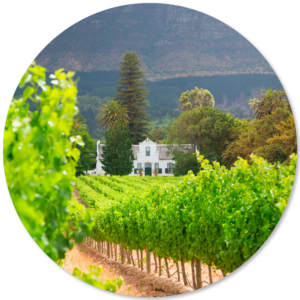
FRENCH CORNER
In the beautiful Winelands about an hours drive from Cape Town visitors sometimes notice that several farms have French names, reflecting the surnames of their owners; du Toit, de Villiers, Fouché, Marais, etc. On meeting these farmers you might be tempted to wish them Bonjour! They will not respond. Let me explain.
In 1688 the administration of the farmlands being developed around Cape Town was in the hands of the Dutch East India Company (VOC). They needed more farmers, in particular those with relevant skills including wine making. At that time Protestants in France were suffering religious persecution (often being burned for their beliefs). Many fled to Holland where the Dutch authorities saw an opportunity and offered several of them a new start at the end of Africa, near a settlement called Cape Town. An initial group of 200 families arrived to find a level of suspicion and an invitation to try farming at the more remote parts of the new colony. Many of them were offered land in an undeveloped valley the Dutch called Olifantshoek, home to large numbers of elephants who came down from the surrounding mountains in the spring and early summer to calve. In those days the valley was home to nomadic tribespeople tending their cattle who lived in harmony with the migrating elephants. Sadly, for both tribespeople and elephants the new arrivals established and fenced large tracts of the valley as new farms. These farms would either carry the names of their owners or nostalgic French names such as Provence or La Motte or Plaisir de Merle.
And so the valley of the elephants came to be known as French corner, or Franschhoek. Many years later the trail followed by the elephants to and from the valley was adopted as the route of a spectacular scenic road known as the Franschhoek pass.
The story of this sleepy farming village continues and becomes rather strange. The Dutch were fairly intolerant of these new immigrants who did not fit in to their society and in a relatively short time the immigrants gave up their culture and became ‘Dutch’, adopting Afrikaans as their home language but retaining a charming habit of giving French Christian names to their children (my own South African son-in-law is called Jean Claude).
Then, three hundred years later wine tourism began to be fashionable and Franschhoek, jealous of the success of their bigger tourist friendly neighbour, Stellenbosch needed a way to sell themselves as a tourist destination. They came up with the idea of presenting themselves as a French village; adopted French names for local businesses, enthusiastically celebrated Bastille Day (France’s most important public holiday) and opened very good French bistros (such as the French Connection). The small matter that no one in the village actually spoke French was conveniently ignored! The rather crazy idea was a success and today the village known as French Corner’ is very busy and successful, even ‘chic’, and well worth including on your Cape Town itinerary, particularly for its excellent restaurants!
Get a front-row seat to John’s storytelling journey. Sign up now to get sneak peeks of upcoming chapters. And be the first to know when Tales from the Driver’s Seat goes to print.
Copyright © 2026 Kestrel Services
Copyright © 2026 Kestrel Services