
Your Travel Companion in Cape Town
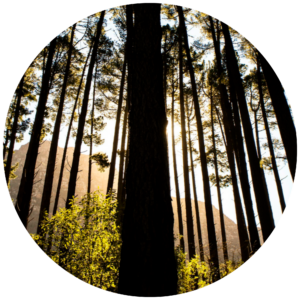
ANCIENT TABLE MOUNTAIN
A hundred thousand years ago a young lady was climbing a sand dune in an area north of Cape Town which we call Langebaan, a beautiful lagoon between shores of Saldanha Bay and the Atlantic Ocean. If she reached a high enough point she would have looked to the South and seen a far off Mountain, flat on the top.
The lady came to be called Eve, by archeologists, who discovered her fossilised footprints.
She was one of the earliest human beings whose identity and location have been discovered. Later, we came to understand that the area of Southern Africa we call the Cape was the grazing and hunting grounds of the San and Khoi people. The mountain with the flat top was called Hoerikwaggo by these early people. The name means Mountain in the Sea and the tribespeople believed that a spirit called Tsui lived there.
Thousands of years later sailors from Europe came to this part of the world, seeking a route to the Indian Ocean and the riches of the spice trade. A Portuguese Admiral called de Saldanha anchored his small fleet in Table Bay and in May 1503 climbed the mountain which soars over the bay. He was not an imaginative man it seems, because on his charts he entered the name Taboa do Capo; Table of the Cape. And so the name has remained. Personally I like ‘Mountain in the Sea’.
In 1971, I arrived by sea in Cape Town with my young family. Whilst they were sleeping and the sun was rising I went on deck and saw Table Mountain for the first time in the blue early morning light. I have been in love with this piece of ancient rock ever since.
Over the years I have been to its summit several times, usually the lazy way travelling by Cable Car. Climbing is not easy and it has become harder with the passing years. Not long after coming to live in Cape Town my adult son, Marc, came to visit and we set off to climb the mountain, up the winter waterfall beside Skeleton Gorge from Kirstenbosch Botanical Gardens. My son stopped frequently for a smoke break and each time we set off again I noted a clinking sound from his backpack. Reaching the summit he revealed a stash of beer bottles and we sat at the high point of the mountain, Maclears Beacon, and shared our love and respect for one another with a couple of cold ‘toasts’.
A few years later Marc died. He left no wishes for his ashes but I thought if I scattered them on Table Mountain he would like that. Over the years spent showing my clients both the easy way up the Mountain and the strenuous hiking option I have always gained an enormous feeling of happiness and contentment when I observe their feeling of wonder at one of the great views of the world.
The mountain can sometimes seem like a beautiful lady, hiding from the gaze of recently arrived tourists behind a veil of cloud. There is an amazing feature of the mountain which occurs when the wind from the South East is blowing at just the right speed and a thin, white cloud forms along the flat edge of the mountain. No surprise that we call this phenomenon the tablecloth. It’s a wonderful thing to see and we hail this wind as the ‘Cape Doctor’ which blows in the hot summer months, removing dust and humidity from the air and raising our spirits in thanks, perhaps to Tsui.
As the wind speed increases the clouds billow and begin to cover the mountain and particularly the part we call Devils Peak.
There is a beautiful legend of an old Dutch farmer called van Hunks, walking on the mountain and meeting the devil. Fearing that the devil may take his soul, van Hunks sat down and challenged him to smoke a pipe of tobacco whilst they talked. When the devil agreed van Hanks puffed mightily on his pipe and produced a cloud of tobacco smoke so thick and dense that he was able to slip away and save his soul. Not many visitors know the story but they look up at the jagged, left hand side of the Table and are told; “Oh, that is called Devil’s Peak”.
Apart from the devil (just kidding!) no one lived on the mountain in the olden days. Indigenous people found no reason to go there seeking game, it was too far from the plentiful herds roaming the flatlands although there were a few small antelope and a curious fat, brown rodent like creature we call a Dassie, whose descendants still live on the mountain today, unafraid of the tourists.
In 1797 an American sailor deserted from a British naval ship in Table Bay and fled to the mountain where he found a well hidden cave. His name was Joshua Penney and for more than a year he lived unknown and unnoticed, hunting the poor Dassies and antelopes, gathering honey and even brewing his own beer. A solitary existence we can relate to from the story of Robinson Crusoe and even Tom Hanks’ Castaway. In time he came down from the mountain looking, according to witnesses, like a’ wild beast’ with dirty long hair and an overgrown, unkempt beard. He found working passage on a ship bound for New York. Some years later he wrote of his experiences but has largely been forgotten by history. Just part of the fabric and tapestry of our dear, much loved mountain.
Copyright © 2026 Kestrel Services
Copyright © 2026 Kestrel Services